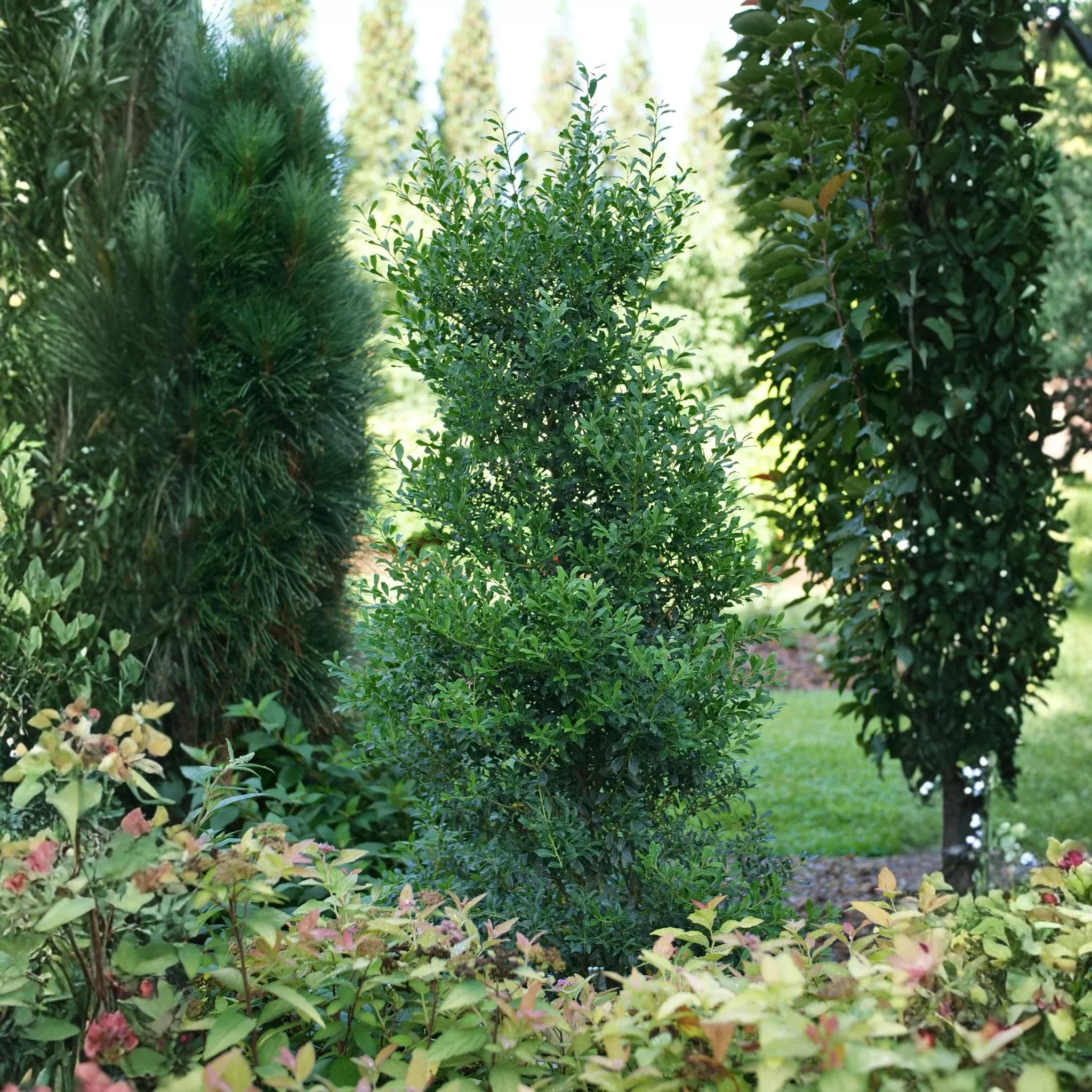
Squeeze Box® Inkberry Holly (Ilex glabra ‘SMNIGFC’) from Proven Winners® brings something genuinely different to the inkberry world. While most inkberry hollies grow into rounded mounds, this one develops a distinctive upright pyramidal shape that opens up a whole new range of design possibilities. Even better, it’s a native broadleaf evergreen that thrives in zones 5 through 9, giving you four seasons of fine-textured, glossy green foliage without a single chemical treatment.
Why You’ll Love Squeeze Box® Inkberry Holly
- Native boxwood alternative: Delivers that classic formal look with genuine native credentials, and it’s not susceptible to boxwood blight or leafminer
- Upright pyramidal habit: Unlike typical rounded inkberries, this one grows 4 to 6 feet tall with a tight 2 to 3 foot spread, perfect for narrow spaces and vertical accents
- Male pollinator: Pollinates Gem Box® and Strong Box® inkberry hollies for reliable berry production
- Wet soil tolerant: One of the few evergreen shrubs that actually thrives in consistently moist or even wet conditions, making it ideal for rain gardens
- Deer and rabbit resistant: Wildlife leaves it alone, so it keeps looking sharp season after season
- Salt tolerant: Handles roadside salt spray and coastal conditions with ease
Growing Conditions
Squeeze Box® Inkberry Holly thrives in zones 5 through 9. It performs well in full sun to part shade, though you’ll see the densest growth with at least four hours of direct light. This shrub prefers acidic, well-drained soil but is remarkably adaptable. It handles clay, consistently moist ground, and even periodic standing water, something very few evergreen shrubs can tolerate.
Provide consistent moisture, especially during the first two growing seasons. Once established, it handles wet conditions naturally but is not considered drought tolerant. If your soil is alkaline, amend with sulfur or peat moss at planting time.
Size and Growth Habit
Squeeze Box® is a slow grower, reaching 4 to 6 feet tall with a 2 to 3 foot spread at maturity. Its upright pyramidal form sets it apart from the round, mounding habit that most inkberry hollies are known for. The fine-textured, glossy dark green leaves are smaller than many hollies, creating a refined appearance that works beautifully in both formal and naturalistic settings.
Landscape Uses and Design Ideas
This is the native plant answer for anyone who loves the look of evergreen shrubs in formal hedges and foundation plantings but wants something adapted to their local ecosystem. Use it as an upright accent in mixed borders, a narrow screen for tight side yards, or a structural anchor in a foundation planting. Its tolerance for wet soil makes it a standout choice for rain gardens and low areas where other evergreens struggle.
Plant it alongside other holly shrubs to provide pollination for berry-producing female varieties. It also pairs well with native perennials and grasses in naturalistic designs.
Planting and Care Tips
Dig the hole twice as wide as the root ball and just as deep. Backfill with a mix of native soil and acidic compost. Mulch 2 to 3 inches deep around the base (keeping mulch away from the trunk) to retain moisture and regulate soil temperature.
Minimal pruning is needed thanks to its naturally tidy form. If you want to shape it, prune lightly in late winter or early spring before new growth begins. Learn more about caring for broadleaf evergreen holly and discover the best evergreen shrubs for year-round structure in your landscape.